
Types of locks: all about hardware and fittings
A good lock is the foundation of a secure home. But which lock suits your situation? Our Amsterdam locksmiths explain what types of locks there are, what they are used for, and how to make the right choice for your home in Amsterdam. This will give you a good idea of the types of locks we can install, replace, and repair.
What are hardware and fittings?
Hardware and fittings is the collective term for all parts that ensure doors and windows close properly and are secured. This includes locks, hinges, strike plates, cylinders, and door handles. Good hardware and fittings ensure not only safety but also ease of use and durability.
The most important types of locks
Mortise lock with latch bolt and deadbolt
The mortise lock is the most commonly used lock in the Netherlands. This lock is fully integrated into the door and consists of two parts: the latch bolt and the deadbolt. When you close the door, the latch bolt automatically falls into the strike plate. The door opens by pressing the handle down or turning the key a quarter turn. If you turn the key two full turns, the sturdy deadbolt falls into the strike plate and the door is fully locked.
Mortise locks are often combined with a profile cylinder and security fittings. This makes them suitable for both interior and exterior doors. There are versions with SKG certification available, which offer extra protection against burglary.
Rim lock
The rim lock is the predecessor of the mortise lock and is mainly found in older Amsterdam buildings. With a rim lock, the lock mechanism is on the inside of the door and is mounted on top of the door. The strike plate is also on top of the frame. This is the well-known lock where “the string through the letterbox” used to go, so that children could always get inside.
The rim lock also has a latch bolt and deadbolt, but instead of a door handle, it has a pull hook or rotary knob on the inside. Rim locks are now less commonly used in new construction, but are still frequently found in Amsterdam in homes from the early 20th century.
Multi-point lock
A multi-point lock is standard in modern new construction. This mortise lock locks the door at three to five points simultaneously with one action. You lock the door by pushing the handle up and secure the lock by turning the key once. By locking the door at multiple points, it is much more difficult for burglars to force the door.
Some multi-point locks only work with the key, without a handle. There are also versions with a panic lock: by pushing the handle up from the inside, the door locks without a key and cannot be opened from the outside.
Passage lock (room lock)
Passage locks are mainly used for interior doors. These locks only have a latch bolt, so the door stays closed but is not locked. The door can be easily opened with the handle. There are also passage locks with a bit key lock, especially in homes from the 70s and 80s. This combination ensures that the door can be locked, but without the security of a full mortise lock.
Bit key lock
The bit key lock is an older variant that is mainly used on interior doors, cabinet doors, and in older buildings on sheds and garages. Bit key locks are recognizable by the key with a “beard” at the end. Although bit key locks are secure, they only have a few hundred variations, compared to the million variations of a cylinder lock. As a result, they are less often used for exterior doors.
Pin tumbler lock
Pin tumbler locks are usually used as an auxiliary lock: an extra lock above or below the main lock for extra burglary protection. A pin tumbler lock is opened with a key that has a star shape, similar to a Phillips screwdriver. By turning the key, two pins slide out that fall into the strike plate in the frame. There are pin tumbler locks with SKG certification that offer excellent additional security.
WC lock
The WC lock is a mortise lock with a latch bolt and deadbolt, but the deadbolt can only be operated from the inside. This ensures privacy without completely isolating yourself from the rest of the house.
Espagnolette
Espagnolettes are mainly used on balcony and garden doors and can usually only be locked from the inside. They consist of two rods that run the entire length of the door and are operated in the middle with a handle or crank. The two locking points are in the sills or in the floor. An espagnolette lock ensures that both rods cannot move without a key.
Auxiliary locks for extra security
In addition to the main lock, you can further secure your door or window with auxiliary locks. These are locks that are placed above or below the main lock and provide extra burglary resistance.
Window latch
A window latch is an auxiliary lock in the form of a handle on the inside of a window or door. By pushing the handle down, a sturdy metal hook slides into a cup on the frame. There are window latches with a push button or key, so that the handle cannot simply be lifted.
Door restrictor
A door restrictor is a short metal sliding plate in which you can hook a chain or curved metal rod. This prevents the door from opening more than about ten centimeters. This prevents someone from easily gaining access by pushing the door open.
Electronic locks
An electronic door lock is a regular mortise lock that is electrically powered. The lock is unlocked via a digital signal from, for example, a smartphone, PIN code, remote control, or RFID tag. Electronic locks can be combined with multi-point locks and offer convenience and modern security. They are especially popular with business premises and modern apartments.
SKG certification: what does that mean?
SKG certification indicates how burglary-resistant a lock is. There are three levels:
- SKG1-star: Light burglary resistance, suitable for interior doors
- SKG2-stars: Standard for exterior doors, meets the Police Mark Safe Housing
- SKG3-stars: Highest level, protects against core pulling and cylinder drilling
For exterior doors in Amsterdam, we recommend at least an SKG2 lock, preferably SKG3 for optimal security. Locks with the Police Mark Safe Housing (PKVW) meet strict requirements and are often accepted by insurers.
Which lock suits your situation?
The choice for the right lock depends on several factors:
- Type of door: Interior or exterior door, wood or metal, direction of rotation
- Security level: Do you want standard security or extra burglary resistance?
- Usage situation: Private or business, much or little use
- Budget: Standard locks or high-security solutions
For Amsterdam homes, we often recommend a combination of a good mortise lock (minimum SKG2) with security fittings and possibly an auxiliary lock such as a pin tumbler lock. For older buildings, a rim lock can be replaced by a modern mortise lock for better security.
Professional advice
Are you unsure which lock best suits your situation? Locksmith Amsterdam is happy to help you with expert advice. Our technicians know all types of locks and the specific challenges of Amsterdam homes, from canal houses to modern new construction. We will work with you to find the best security solution for your home or business premises.
Emergency
Our 24/7 locksmith service is ready for emergencies.
Make an appointment
For all your lock-related matters in Amsterdam.
Gerelateerde berichten
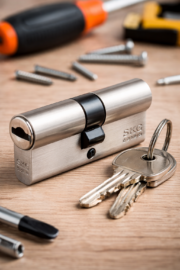
Cilinderslot vervangen in Amsterdam
Geplaatst op 03 March 2026
Uw sleutel draait steeds stroever. Of u bent uw sleutels kwijtgeraakt na een avond in de Jordaan. Misschien heeft u net een woning gekocht in Amsterdam Oost en wilt u zeker weten dat oude sleutels niet meer werken. In al deze situaties komt dezelfde vraag naar voren: cilinderslot vervangen in Amsterdam, kan ik dat zelf doen?
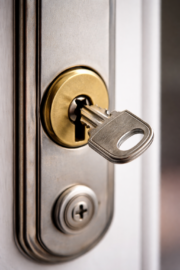
Sleutel afgebroken in slot in Amsterdam. Wat nu?
Geplaatst op 03 March 2026
U steekt uw sleutel in het slot en ineens hoort u een droge klik. De sleutel breekt af en een deel blijft vastzitten. Dit probleem, sleutel afgebroken in slot in Amsterdam, kan iedereen overkomen. Het gebeurt op de grachten rond de Dam Square, in de tuindorpen van Amsterdam Oost of in een karakteristiek pand in de binnenstad.
SKG locks Amsterdam: complete guide to safe living
Geplaatst op 10 February 2026
Are you wondering if your current locks are strong enough? Can they withstand core pulling or other burglary methods? Is it time to invest in better security? In this blog, we explain step by step what SKG locks are, why the difference between SKG 2 and SKG 3 is important, and how you can optimally secure your home. This way you can be sure that you live safely and can enjoy everything Amsterdam has to offer with peace of mind.